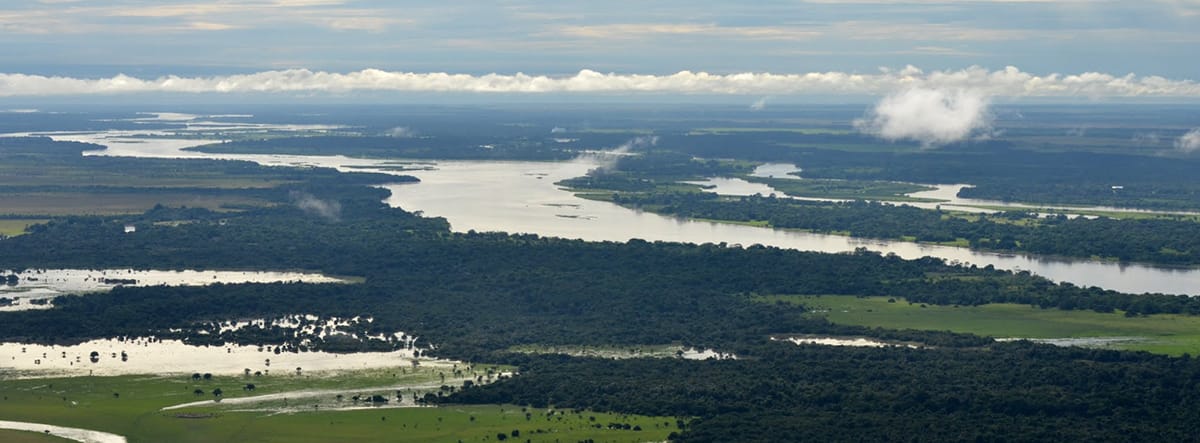
The Orinoquía region

The Orinoquía region is one of Colombia's five most complex and biodiverse natural regions, belonging to the Orinoco River basin, also known as the Eastern Plains. It comprises vast savannas and countless wetlands of immeasurable richness, forming a vast network stretching from the Andes Mountains to the plains, covering an area of ​​285,437 square kilometers at an altitude of 350 meters above sea level.

The natural subregions of the Colombian Orinoquía

Llanero foothills, Meta Plateaus, Guaviare Plains, Arauca Swamps, Macarena Mountain Range.

Parks, reserves and sanctuaries

El Tuparro National Natural Park, Sierra de la Macarena, El Cocuy National Natural Park.

Hydrography

The region's hydrography comprises all the rivers of the Orinoco River basin (including the Orinoco itself), which total approximately 328,000 km². It is made up of the following basins: Guaviare River Basin (140,000 km²), Meta River Basin (112,000 km²), Vichada River Basin (26,000 km²), Other basins (22,000 km²), Tomo River Basin (20,000 km²), Arauca River Basin (Colombian part) (8,000 km²), and Casanare River Basin.

Departments and capitals

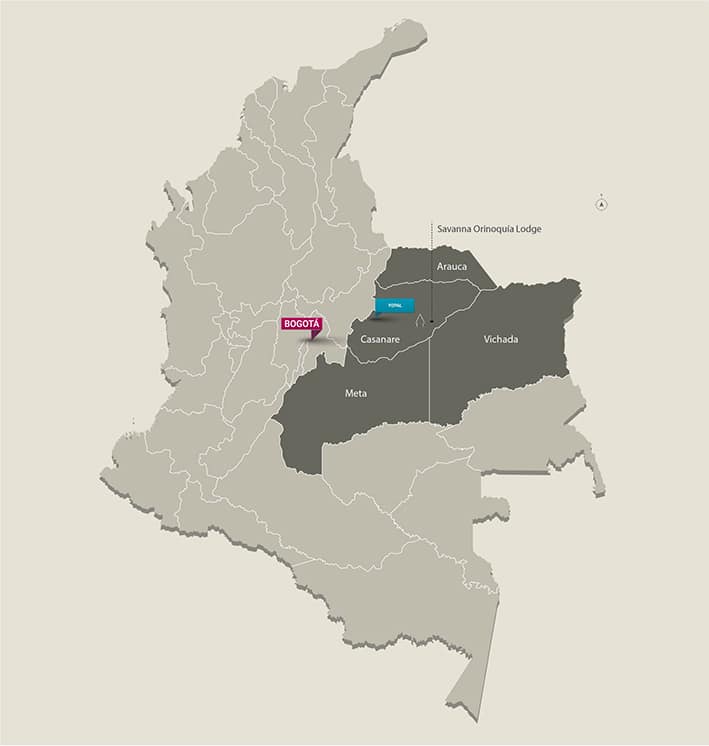
The departments that have territory in the Colombian plains are: Arauca, capital Arauca, Casanare, capital Yopal, Meta, capital Villavicencio, Vichada, capital Puerto Carreño.

Casanare Department

Colombian department with 16 ecosystems encompassing the floodplain, the high plains, the sub-Andean and Andean forests and the páramo for a total area of ​​44,160 km2 (27% of the Orinoquía).

History

The first inhabitants of the region were the native Tunebos, Guahibos, Salivas, Cusianas, Caquetíos, Piapocos, Amorúas, who with the Spanish conquest of the Eastern Plains at the beginning of the 16th century were subjugated and enslaved through the encomiendas.

Geography

Casanare has an area of ​​44,490 km², which in terms of size is similar to that of Denmark. Its territory consists of the mountainous region, the foothills of the Llanos plains, and the alluvial plain; the mountainous region is located in the west, on the slopes of the Eastern Cordillera, and rises to heights of 4,000 m above sea level.

Economic activity

Traditionally, the territory of Casanare has had extensive livestock farming and rice cultivation as its main economic activities (especially in the municipalities of Aguazul and Yopal).

Climate

The temperature varies from 25 to 29 °C. The climate changes from humid in the foothills of the plains, to cold in the Andean zone (21 to 23 °C), passing through a tropical climate in the savanna zone (about 30 °C, rainy in winter, dry in summer).

SEASONS

DROUGHT SEASON

SUMMER - November to March
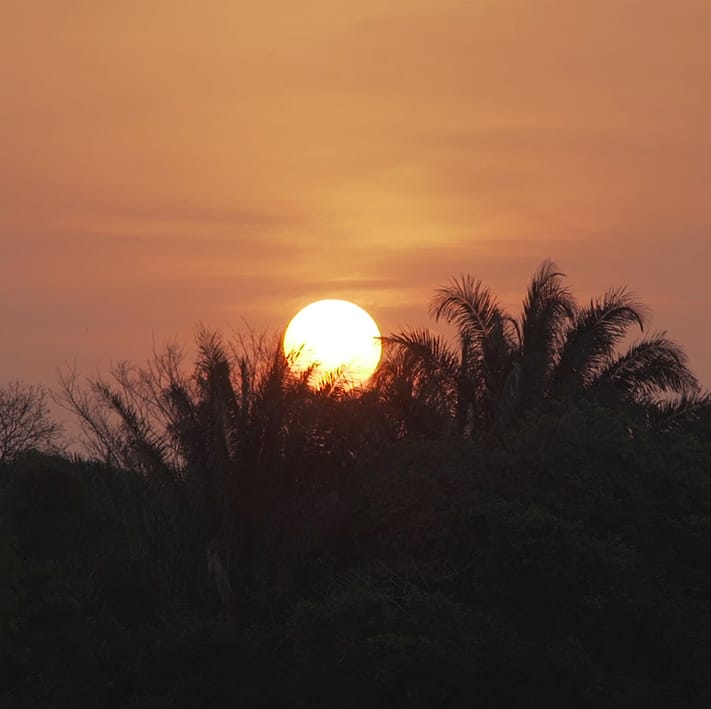
Heat intensity

The hot season lasts 4 months, from November to March.

Temperature

The average daily maximum temperature is over 34°C. Strong winds and very low humidity.

Peak temperature

The hottest day of the year is sometime very close to February 23, with an average maximum temperature of 35°C and an average minimum temperature of 26°C.

Driest season

The driest season lasts three months, from December to March. The lowest probability of rain on a day around January 16th is 13%.

Lower risk of rain

The approximate date with the least amount of rain is very close to January 16, with an average total accumulation of 23 millimeters.

RAINY SEASON

WINTER - April to October

Chance of rain

The rainy season lasts eight months, from April to October, with a 50% chance of rain on any given day. The highest probability of rain occurs around May 15th.

Temperature

The cool season lasts 8 months, from April to November, and the average daily maximum temperature is close to 30°C.

Warmer season

The coldest day of the year is very close to July 9th, with an average minimum temperature of 24°C and an average maximum of 30°C.

Average rainfall

A rainy day is defined as a day with at least 1 millimeter of rainfall. The probability of rainy days varies considerably throughout the year.

CULTURES

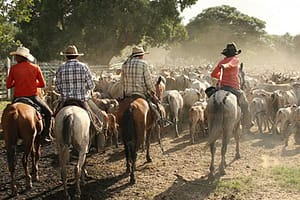
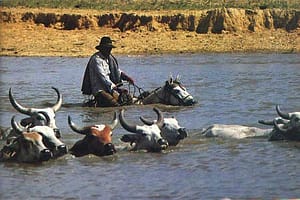
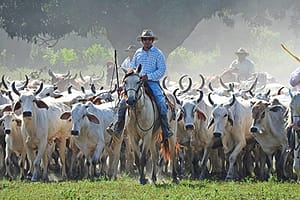
Approximately 369,000 inhabitants (Year 2019). For the native Llanero, life is lived on the endless savanna. He possesses extensive knowledge of animals and their diseases and identifies strongly with herons, cattle egrets, curlews, and especially with the horse, because the two are one and the same. Traditionally, he has raised wild cattle and cultivated crops for his livelihood. He harvests cassava and plantains, which, along with meat, form the basis of his diet.
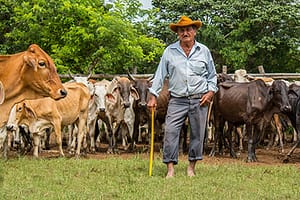
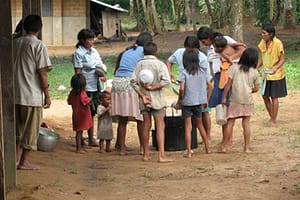
 

The people of the plains are born partygoers; they dance, sing, drink, and woo, throwing huge celebrations. Parties are an integral part of their culture and tradition. The plainsman always sings verses composed about lost love, his horse, and his savanna. He is a devout believer, yet also superstitious. The plainsman is known for being an expert swimmer and navigator, a skilled hunter and fisherman, a craftsman of hardwoods and soft woods, and a builder of the traditional Caney architecture. They wear light clothing: the men wear flannel shirts and short pants called Guayucos, sandals, and a hat made of guama fiber. They sleep in hammocks made of Moriche or Cumare wood.
The most representative dance is El Joropo, in which couples take turns dancing together without letting go, their feet stamping, making it a very colorful and graceful dance. The llanero man is a great composer and has great respect for his music, which he performs by singing or playing instruments such as the cuatro, the harp, and the maracas. The contrapunteo in the Llanos is a duel of verses between two llanero singers, where only one will be the winner.